

December 15, 2025, 3:46 pm | Read time: 6 minutes
Determining whether a budgerigar is male or female isn’t always obvious at first glance—yet identifying the sex is essential for harmonious cohabitation in the aviary. Especially when keeping just two birds or assembling entire flocks, a misjudgment can have serious consequences. Surprisingly, it’s not behavior or body structure that provides clarity—but a tiny spot above the beak. Even experienced owners can be puzzled by certain color variations or young birds.
Sexual Dimorphism in Birds–Not Always Immediately Recognizable
Many bird species exhibit what’s known as sexual dimorphism, meaning differences in appearance between males and females. For example, male blackbirds are deep black with an orange beak, while females are a plain brown. In wild-type budgerigars—the green, wild birds in Australia—it’s different: Both sexes display the same green-black plumage, making distinction from a distance impossible.
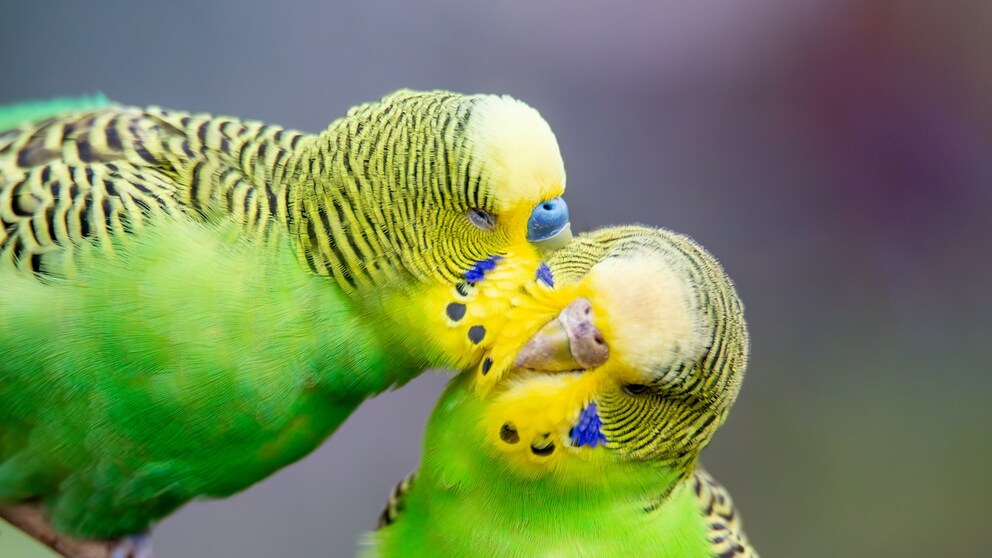
Upon closer inspection, a key distinguishing feature becomes apparent in adult budgerigars: the cere, or nasal skin. This unfeathered area above the beak, which also contains the nostrils, differs in color between the sexes. In adult males of the wild type, the cere is typically blue, while in females, it is brown.
This small detail is thus the most important criterion for determining the sex of budgerigars. It is particularly distinguishable in adult birds of the basic blue and green colors. However, it can vary slightly due to hormonal changes: During breeding season, the cere of males turns a more intense blue, while in females, it becomes darker and sometimes crusty. In phases of hormonal rest, it appears lighter in males, and in females, it can appear beige. Nevertheless, the basic color provides reliable clues about the sex.
Striking Breeding Forms Complicate Identification
Certain breeding color variations significantly complicate classification. In darker breeding forms, the principle “blue = male, brown = female” usually applies. However, a lightened feather pigmentation also affects the color of the cere. This is particularly noticeable in lutinos and albinos, which have almost no melanin. Here, the cere often remains pink to violet even in adult males. Females of these color variations show a light pink to beige/brown-tinted cere, often without developing the typical crusty structure during breeding season.
Pied budgerigars, especially those with pronounced markings, can also have an unusually colored cere. In males, it often appears pale pink, violet, or speckled, sometimes interspersed with white or brownish areas. Even in spangles, the assignment is not always clear: Color transitions or mixed forms can occur in both males and females.
Additionally, very light or recessive color variations can show a lightened cere with white rings around the nostrils. In such cases, the age of the bird is crucial for reliable identification, in addition to the cere color. Those who want to be absolutely sure can have a feather taken by a veterinarian and determine the sex through a DNA test.
Special Case: Sex Determination in Very Young Budgerigars
In nestling budgerigars, the color of the cere changes in the first weeks of life. Only afterward does it often become easier to determine the sex. However, there are some general observations:
- Young females usually show a light blue cere with fine white rings around the nostrils.
- Young males can also have a blue cere, but the rings around the nostrils are usually not white, just slightly lighter than the rest.
Very often, the cere in young males is also a strong pink to violet—or already dark blue, as in adult males. In females, however, an initially pale blue cere later changes toward brown, which can sometimes lead to surprises. If unsure about newly acquired birds, it’s advisable to rely on sex determination through feather DNA. 1
Why Sex Is So Important for Budgerigar Keeping
Budgerigars are highly social animals and should never be kept alone. Whether you choose a pair or a small group depends on your own circumstances—but a harmonious group dynamic is always important. In households, tensions among the birds cannot be eased by distance, as would be possible in nature. Therefore, a harmonious coexistence of budgerigars strongly depends on the right pairing.
Ideally, a pair consists of either a male and a female or two males. Keeping two females without male companions, however, can lead to problems—sometimes even aggressive behavior. Additionally, a minimal age difference helps ensure that the birds have similar temperaments and needs.
In larger groups, an even number of birds should be maintained—such as four or six–so that no bird is left without a partner. A trio should be avoided, as one bird can quickly be left out. Regarding sex distribution in larger groups, the safest approach is to maintain a balanced ratio of males to females. Ideally, the birds should choose their partners themselves in a larger group.
Myths About the Sex of Budgerigars–What’s True?
Theories often circulate suggesting that the sex of budgerigars can also be determined by behavior. For instance, females are considered particularly fond of shredding, while males are seen as more courtship-oriented and tame. However, there is no scientific basis for these assumptions. Neither body structure nor feather color reliably indicates sex. Statements like “females are slimmer” or “have wider-set feet” do not hold up.
There is also the rumor that budgerigars can change sex. This biological phenomenon, which does occur in certain fish species like clownfish, is not known in budgerigars. Sex is determined at birth and does not change later in life. Color changes in the cere—such as during youth or due to hormonal fluctuations–may give this impression, but do not lead to an actual sex change.

Do Flamingos Feed Their Young with Blood? 8 Fascinating Facts About Flamingos

The different sounds and songs of budgies and what they mean
Caution with Changes in the Cere
Changes in the cere should not be ignored—especially in males. A browning of the normally blue cere in male budgerigars should be seen as a warning signal. Possible causes could include a hormonally induced testicular tumor, liver diseases, or other conditions affecting the bird’s hormonal balance.
Crusts are also considered a sign of health issues in males. In females, however, slight crusting of the cere during breeding readiness is normal. Care should be taken to ensure that the crusts do not become excessive and, in the worst case, lead to breathing problems by overgrowing the nostrils. In case of abnormalities, a visit to an avian veterinarian is always recommended. 2
Conclusion: Only the “Nose” Reveals the Sex
Reliable statements about the sex of a budgerigar are only possible through the color of the cere. Behavior, body shape, or plumage do not provide any clues. Due to intensive breeding or before the juvenile molt, this feature can vary.