

August 7, 2025, 2:40 pm | Read time: 5 minutes
When cockatoos sway to music, there’s apparently more to it than mere instinct. A study delves into this behavior and examines what can actually trigger dancing in cockatoos. The birds display up to 30 different “moves,” many of which have not been observed before. Why they do this and whether music is even necessary raises further intriguing questions.
Cockatoos Surprise with 30 Different Dance Moves
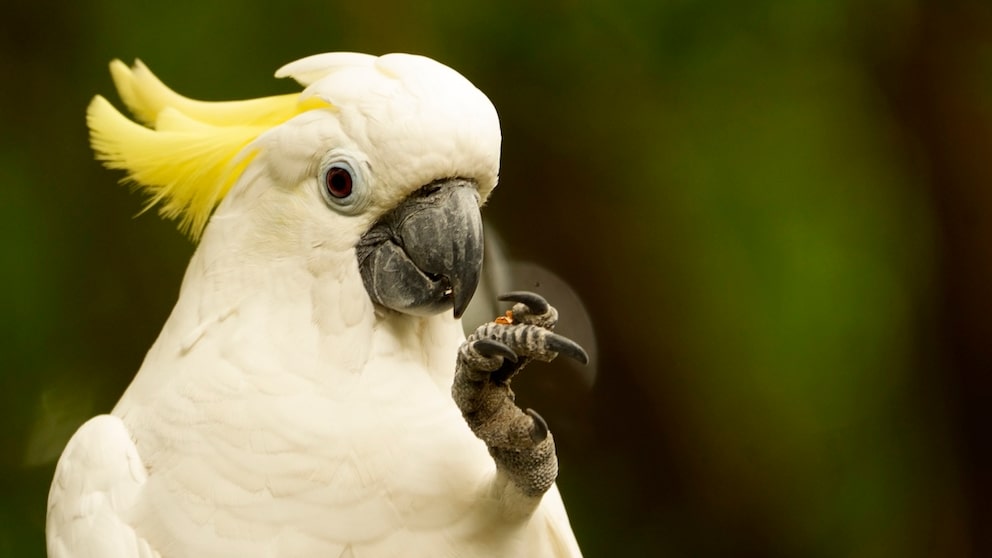
A cockatoo rhythmically headbanging or marching sideways on a branch–these scenes are not only viral internet hits but also scientifically fascinating. Previously, cases were documented where parrots seemed to dance to the beat of music, but it appears human-made rhythms aren’t necessary. Increasingly, studies suggest that the colorful birds don’t just dance for females.
How far the dance behavior in cockatoos went could only be speculated until now. Studies on individual birds like the famous cockatoo Snowball already showed spontaneous rhythmic movements such as head nodding or foot stomping. Complex courtship behaviors following rhythmic patterns are also known from the wild–for example, the palm cockatoo, which drums with its own beat to attract females.
But cockatoos also enjoy dancing alone or with their human companions. One hypothesis is that dance behavior is linked to the ability to imitate and to rhythmic entrainment (adapting to external rhythms). Both are traits of species with high vocal learning ability.
At the same time, dance movements could be a sign of positive well-being. This is where the study comes in: aiming to systematically record, understand, and examine the potential benefits of dance behavior as environmental enrichment. The question is: Is dancing in parrots an expression of joy–or just a misunderstood behavior?

Cockatoos Even Dance to Podcasts
Scientists from Charles Sturt University (Australia) and the University of Bristol (UK) jointly examined 45 clips. They analyzed the “moves” of various Goffin’s cockatoos, sulfur-crested cockatoos, and white-crested cockatoos. The study, published on August 6, 2025, in “PLOS ONE” under the leadership of Natasha Lubke, also includes a playback experiment with zoo birds at Wagga Wagga Zoo & Aviary.
For the analysis, only videos where music was clearly played during the recording and where the birds showed at least two different movements were considered. Based on these clips, the scientists developed a detailed behavioral inventory (“ethogram”) with 30 clearly defined dance moves, 17 of which had not been documented before. Many other “rare” movements, shown by only individual birds, were also described.
In the second part, six cockatoos of different species were allowed to show what they could do on the dance floor. The animals were exposed in pairs to three stimuli: music (a song with 126 BPM), a spoken podcast, and silence. The behavioral reactions were documented and analyzed via video recording. The experiment was approved by the ethics committee of Charles Sturt University.
Also interesting: Cockatoos Season Their Noodles with Vegan Blueberry Yogurt

Cuttlefish Wave to Each Other to Communicate

Clever Cockatoos Master Drinking Fountains – How the Birds Adapt to Urban Life
Every Other Cockatoo Shows Instinctive Headbanging
In the video part of the study, the most frequently shown movements were “Downward” (lowering the head, 50 percent of the birds) and “Sidestep” (side step, 43 percent). In the playback experiment, all six zoo cockatoos displayed dance movements–regardless of whether they heard music, speech, or silence. It was notable that the dance behavior varied greatly both between species and individual animals. Even closely related species apparently developed their own “Top Ten” preferred movement forms. Some animals combined several movements into entirely individual choreographies.
Many of the documented movements strongly resembled typical courtship dances, as observed in wild parrot species. However, many cockatoos have spent their entire lives with humans. Thus, they could not have learned dancing from conspecifics or directly from their owners. Researchers therefore suspect that the dance arises from internal impulses. It is an independent behavioral pattern that originally stems from courtship behavior but has changed in captivity.
At the same time, the similarity of many movements is likely also rooted in the natural communication of the animals. Circular movements, rhythmic swaying, and feather fluffing also play a role in the wild, especially during courtship. Therefore, the research team finds it plausible: The dance of cockatoos in captivity could be a form of behavioral biological transmission, with which the animals try to connect with humans.
Do Cockatoos Just Have Rhythm in Their Blood?
The study provides strong evidence that dance behavior in the birds is a widespread, not exclusively courtship-related behavior. Since cockatoos also danced without music, it is assumed that they do not necessarily need rhythmic stimuli. This suggests that it is a form of social play or self-stimulation–possibly with a positive effect on well-being.
At the same time, the variety of movement patterns and individual variations point to advanced cognitive abilities, including imitation, creativity, and motor learning. The fact that dance patterns do not appear among cockatoos of the same species suggests other factors at play, such as social play or self-stimulation, possibly with a positive impact on well-being.
Further investigations must now determine whether this is stereotypical behavior–that is, repetitive, functionless movements–or if cockatoos use dance to enhance their well-being.
However, final conclusions are yet to be drawn: If dancing is indeed an expression of joy, it could represent an enrichment for their care, offering the animals an occasional “stage.”
Also interesting: Cockatoos use tools to drum and attract mates