

August 29, 2025, 12:52 pm | Read time: 7 minutes
“Help, my fish has white spots!” – This is a phrase almost every aquarist has likely uttered. The white spot disease is one of the most well-known and dangerous fish diseases. It is caused by the single-celled parasite Ichthyophthirius multifiliis, which attacks the skin, fins, and gills of fish, causing significant damage. Although the disease is widespread, the chances of treatment are good with early diagnosis–provided one acts decisively. PETBOOK explains how to protect your aquarium and pond inhabitants.
How Dangerous Is White Spot Disease?
White spot disease–scientifically known as Ichthyophthiriosis, and colloquially among aquarists as “Ichthyo,” “grit disease,” or “spot disease”–can affect virtually any fish. Freshwater, saltwater, and pond dwellers can all contract the pathogen Ichthyophthirius multifiliis.
This is a ciliate that can be present in small numbers in almost any aquarium without immediately causing illness. The disease only breaks out when the fish’s immune defenses are weakened. Typical triggers include stress, transport, relocation to a new tank, poor water quality, temperature fluctuations, or inappropriate cohabitation.
The parasite’s life cycle explains why the disease can escalate so quickly: Initially, it burrows into the fish’s skin as a so-called trophont, where it grows protected and feeds on the host’s cells. Once mature, it leaves the fish, falls to the bottom, and forms a resilient cyst. In this capsule, up to a thousand offspring are produced through cell division, which then swim freely in the water and infect new fish. This cycle can be completed in as little as 12 to 24 hours at high temperatures, leading to a rapid infestation of the entire stock.
Untreated, white spot disease often ends fatally. The parasite bores into the fish’s skin and fins, feeding on the tissue and damaging the mucous membrane so severely that it becomes susceptible to secondary infections by bacteria or fungi. A gill infestation is particularly dangerous: The animals can hardly absorb oxygen and ultimately die of suffocation. Because the pathogen can spread explosively in the aquarium, immediate action is required when the first signs appear. 1
How to Recognize White Spot Disease
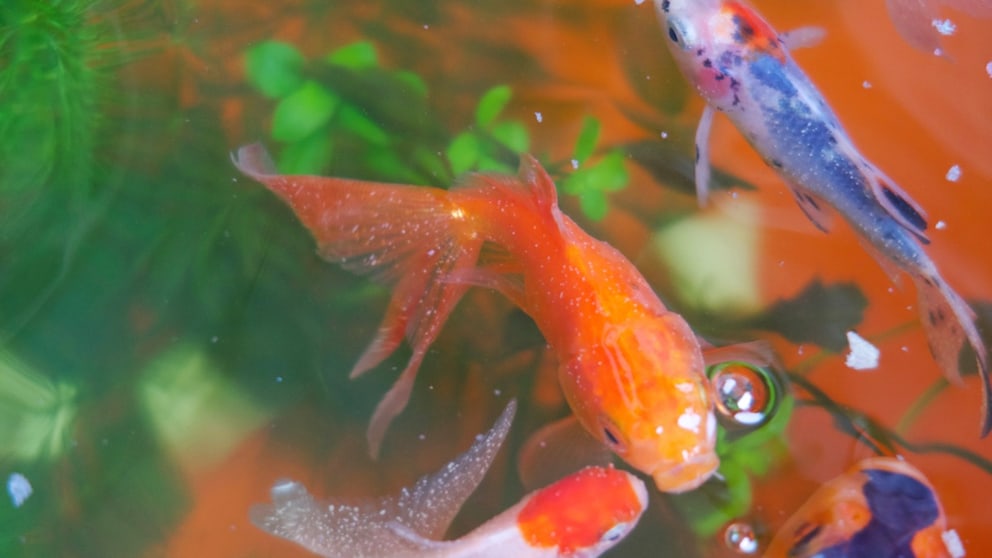
The main feature is the eponymous white spots, which initially appear sporadically on the fins and later cover the entire body. These spots resemble small grains of grit, giving the disease its other nickname. As the disease progresses, they can merge into gray areas, the skin becomes inflamed, and excess mucus is produced.
But it’s not just the external appearance that changes. Affected fish also exhibit noticeable behavioral changes: They often rub against stones, roots, or aquarium glass in an attempt to rid themselves of the parasites and appear generally more restless. Many animals isolate themselves from the group, refuse food, show rapid breathing, or clamp their fins tightly to their bodies. In the late stages, the fish become noticeably emaciated and apathetic. If the gills are affected, they often hang just below the water surface to take in additional oxygen.
How Is the Disease Diagnosed?
In most cases, a glance at the characteristic white spots is enough to make a diagnosis. However, a veterinarian can provide clarity with a swab and microscopic examination, ruling out other diseases that cause similar symptoms. This article explains how to take fish to the vet. Under the microscope, the veterinarian can usually identify the pathogen well: a rapidly rotating sphere with cilia and a u-shaped nucleus.
Treatment in the Aquarium
As soon as the first symptoms are visible, treatment should begin immediately. The most common method is the use of special medications containing active ingredients such as malachite green or methylene blue. These agents only affect the free-swimming swarmers, so treatment must be consistently carried out for at least seven days–sometimes even longer until the last generation of parasites is killed. During this time, the aquarium should be darkened and additionally aerated, as some active ingredients are light-sensitive.
Salt can also be a useful addition. A light salt bath or the addition of table salt to the water positively affects the regeneration of the fish’s mucous membrane and weakens the parasites. However, not all fish species or invertebrates like shrimp respond equally well to salt, so this method should be used cautiously and always discussed with a knowledgeable veterinarian beforehand.
A UV water clarifier can also help break the infection cycle. The device kills the free-swimming swarmers before they find a new host. This is a gentle alternative, especially for resistant parasite strains or sensitive fish species that poorly tolerate medications.
Parasite Control Through Temperature and Quarantine Tanks
Many aquarists support therapy by gradually increasing the water temperature. Raising it to about 82 to 86 degrees Fahrenheit accelerates the parasite’s development cycle, allowing the swarmers to be released more quickly and reached by the medications. Caution: Not every fish species tolerates these temperatures, so this measure should be well-considered beforehand, or the animals should be temporarily placed in a transition tank.
This is a very labor-intensive but highly effective method. By regularly moving the fish, they are placed in a fresh quarantine tank every 12 hours. The parasites remain in the old tank, where they die before they can develop further. After a few days, the infestation is so reduced that the fish can overcome the rest on their own. However, this method requires a lot of experience and discipline. 2
Treatment for Pond Fish
White spot disease is also common in ponds, especially among koi and goldfish. However, treatment is more complicated here. On the one hand, controlling water temperature and medication dosage in a large body of water is difficult. On the other hand, cold-water fish are more sensitive to temperature adjustments, making artificial warming often impossible. While the parasite develops within a few days in warm aquarium water, the cycle can take up to two weeks in a cold pond. Accordingly, treatment must be maintained much longer and may need to be repeated multiple times.
In large ponds, it is usually advisable to move sick animals to a smaller basin or quarantine tank, where water values can be better controlled and medications more precisely dosed. A reliable diagnosis is particularly important, as other conditions–such as the harmless spawning rash in koi in spring–can easily be mistaken for white spot disease.
The most common fish diseases and how to protect your animals
How to Keep and Care for Sticklebacks in an Aquarium or Garden Pond
What Are the Chances of Recovery from White Spot Disease?
If the disease is recognized early and treated consistently, the prognosis is good. Many fish recover completely and suffer no lasting damage. Some even develop a certain immunity because their bodies produce antibodies against the parasite. Without treatment, the disease is almost always fatal–not infrequently, owners lose their entire stock within a few days.
The key is to recognize the typical white spots early and immediately begin appropriate treatment. With careful care, good prevention, and decisive action, the parasite can be effectively kept in check–and the fish can fully recover. 3
How to Prevent Ichthyo
The best therapy is always prevention. Since parasites usually enter the aquarium through new fish, plants, or decorative items, new additions should always be quarantined first.
Careful monitoring of water quality, regular water changes, and a varied diet strengthen the fish’s natural defenses. Stress should be avoided as much as possible–this includes not overcrowding, appropriate cohabitation, and stable temperature and water values. Many aquarists also rely on natural aids like Indian almond leaves or humic substances, which make the aquarium environment more fish-friendly and make life harder for pathogens.