


July 16, 2025, 12:03 pm | Read time: 7 minutes
Orangutans in the boxing ring, dressed in bikinis, bowing to tourists—is this just harmless fun or an ethical disaster? A new study reveals how supposedly “non-consumptive” forms of wildlife tourism—meaning without killing or hunting—can still deeply infringe on the dignity, privacy, and autonomy of animals. The case of Bangkok offers disturbing insights into our relationship with animals.
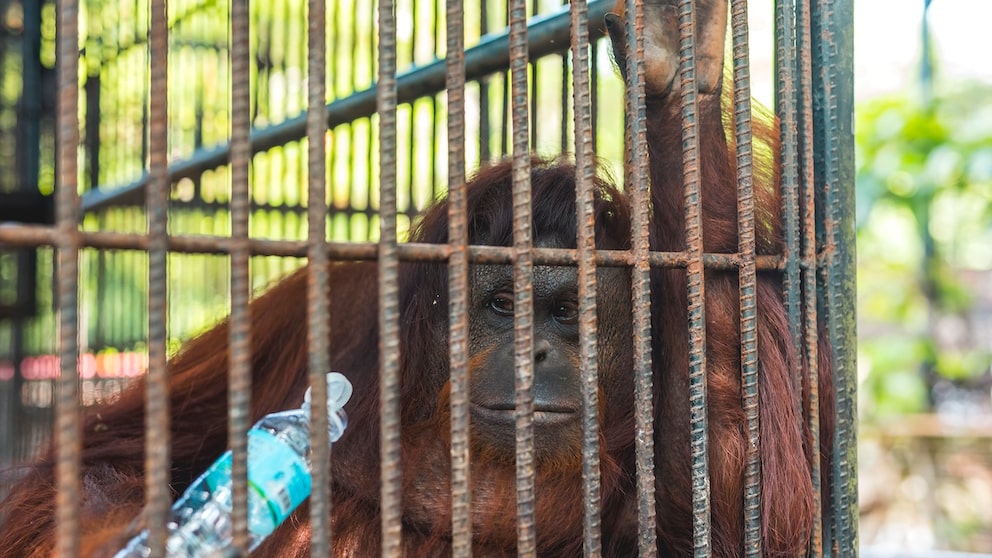
“What’s wrong with orangutan kickboxing shows?”—this is the provocative title of a new study on wildlife tourism. A research team from the University of Veterinary Medicine Vienna and the University of Salzburg analyzed not only physical harm but also the symbolic devaluation of animals through their visibility in tourism. Using the example of kickboxing shows with orangutans in Bangkok, two researchers examined how gaze, power, and objectification interact. Even merely observing wild animals can cause significant harm. The results were published in the journal “Journal of Agricultural and Environmental Ethics.”1
Is Avoiding Violence Enough to Meet Animal Ethics Standards?
More and more people today live in urban areas and have little contact with wild animals. So-called wildlife tourism—experiencing wild animals up close on land and in water—offers a substitute. This often occurs in the form of observation in zoos, parks, or shows. “Non-consumptive” offerings, where animals are not killed, are considered ethically acceptable. 2
But this is precisely where the study comes in: Is avoiding violence enough to meet animal ethics standards? The authors argue that animals can still be wronged when they serve as entertainment objects—through constant observation, training, or degrading portrayals.
The human as the dominant observer influences not only the animal itself but also our perception of human-animal relationships. With a focus on media and animal ethics, the researchers examined these invisible forms of consumption, thereby expanding the ethical discussion around wildlife tourism.
Apes Perform in Humorously Sexualized Shows
The authors developed a theoretical analysis model that shows how animals in wildlife tourism are objectified through visibility—made into mere objects. They proposed three hypotheses:
- (A) Objectification means the loss of subject status
- (B) it is accompanied by a loss of power, and
- (C) Gaze and power are interconnected.
They applied these concepts to a specific case study: kickboxing shows with orangutans at the private animal and leisure park, Safari World Bangkok. There, apes perform in humorously sexualized shows, doing tricks or simulating fights. The study is based on a conceptual analysis of current literature from animal ethics, media ethics, and philosophy.
The aim was to uncover less obvious forms of injustice that go beyond animal welfare, such as the violation of dignity, privacy, and so-called “agency” (meaning the power to act). The animals are not only trained but also controlled in their portrayal. This form of portrayal is criticized as “visual consumption.”
Shows with Wild Animals Negatively Shape Animal Relationships Long-Term
The study shows that animals in wildlife tourism—even without direct physical violence—are morally mistreated in various ways. In the case of orangutans in the kickboxing ring, it was found:
- Overexposure and Objectification: The animals are constantly exposed to the tourist gaze, their natural behaviors suppressed. Their “wildness” is turned into consumable entertainment.
- Violation of Dignity and Respect: Orangutans are ridiculed in costumes and sexually connoted shows. They perform “emotional labor” to entertain the audience—a loss of respect for their individuality.
- Restricted Agency: The animals have no control over their behavior, no choice of social relationships, and no autonomy.
- Violation of Privacy: Intimate behaviors like kisses are degraded to show acts—a profound intrusion into the animals’ privacy.
- Interchangeability and Economic Exploitation: Animals are replaced when they “no longer function,” revealing their instrumentalization and interchangeability.
The shows suggest a cheerful animal-human interaction but obscure fundamental ethical issues. The researchers argue that such portrayals negatively shape the human-animal relationship in the long term.
Wild Animals Are Made into Mere Entertainment Objects
The team emphasized that the problem is not captivity itself but the specific way animals are made visible and “consumed” through the gaze of tourists. “Here, orangutans are costumed in bikinis or uniforms and forced to perform human-like tricks with often sexualized undertones, such as simulating intercourse or dancing provocatively—all for the amusement of tourists,” quotes the science magazine “Phys.org” co-author and Associate Professor Georgette Leah Burns.
Thus, the researchers show that even seemingly harmless tourist encounters can raise profound moral issues. In the example of orangutans kickboxing, this may not initially surprise. But even if the animals were kept under impeccable and species-appropriate conditions behind the scenes, such a portrayal would not only be ethically objectionable. It also fuels an anthropomorphizing view of animals, which can have negative effects not only in dealing with wild animals.
Portrayal Conveys Problematic Messages
For the animals are not only trained but made into mere entertainment objects through their constant availability to the human eye. This portrayal conveys problematic messages, such as human superiority or the idea that animals exist for human amusement. Such a view reinforces anthropocentric worldviews and promotes the separation between humans and animals. This can also affect our coexistence with pets. Cats and dogs are supposed to entertain us. It’s also acceptable to scare the animal for amusement or dress it in costumes, as countless videos on social media show.
The authors, therefore, call for an “ethics of seeing” that respects animals as independent subjects. These ethics must sensitize visitors instead of leading them to laugh at the devalued animals. The contribution thus provides an important impetus for the further development of ethical standards in tourism. “As wildlife tourism continues to grow, this work challenges the industry to rethink its ethical foundations and move toward more compassionate and respectful models of engagement,” Burns explains. “Activities should be structured to promote the understanding of animals as individuals with intrinsic value and not as mere entertainment,” she says.

Orcas Exchange “Tongue Kisses”–The Reason Is Surprising

Chimpanzees Stick Grass in Ears and Rear Because It’s a “Trend”
Researchers Propose Model for Evaluating Forms of Animal Tourism
The study is based on a philosophical concept analysis with theoretical depth, not on empirical animal observations or interviews. This can be seen as a limitation: statements about specific animal welfare conditions (e.g., stress levels or health data) remain speculative. Nevertheless, the strength of the work is its thorough, systematic examination of ethical contexts.
The researchers convincingly engage with central theories from animal ethics, media ethics, and social philosophy and propose an innovative model for evaluating forms of animal tourism. The example of the orangutan shows was analyzed comprehensibly—including the historical issue of illegal animal imports.
An empirical addition could help validate the presented model in practice and apply it to other types of tourism (e.g., “selfies with sloths”). The study is an important contribution to a nuanced ethical debate.
Conclusion
The study makes it clear: Not every seemingly harmless tourism activity with animals is ethically unproblematic. Even without violence or killing, wildlife tourism can violate animals’ dignity, privacy, and agency. The researchers show that visibility and objectification are central axes along which animals are systematically devalued in tourist settings.
The example of kickboxing shows with orangutans makes these processes starkly visible. For the future, the study advocates for a fundamental reorientation: tourist animal encounters should be based on respect, opportunities for retreat, and voluntary visibility—not on training, amusement, and constant presence. Only in this way can an ethical relationship between humans and animals arise, based on respect and recognition of animal needs.