

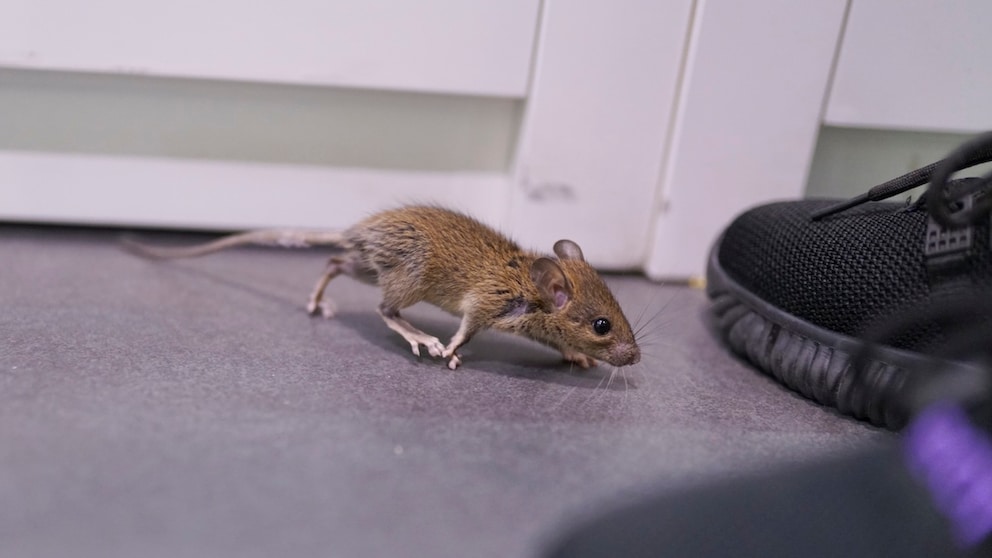
September 12, 2025, 3:44 pm | Read time: 4 minutes
Mouse traps–small, inconspicuous, and available in almost every hardware store. But what many don’t know: They hide a controversial animal welfare issue with clear rules, bans, and hefty fines. Often, they lead to a painful death, prompting PETBOOK to ask: Are there humane mouse traps?
Why Mouse Traps Are Under Criticism
Having a mouse in your apartment or house is not a funny affair like in Tom & Jerry. Quite the opposite: It can be dangerous for both mouse and human. On one hand, mice might gnaw on electrical cables. An exposed power cable can cause a life-threatening electric shock–without insulation, the current is 300 times stronger.
On the other hand, many people resort to supposedly humane mouse traps to get rid of mice. But this is where the problem lies: Many of these traps are designed to kill the animals painfully. Mice often suffer long agonies–they die of thirst, sustain severe injuries, or die in panic. Therefore, the Animal Welfare Act includes guidelines and bans on humane mouse traps to prevent animal suffering.
When it comes to whether humane mouse traps exist, it depends on whom you ask. In 2024, the animal rights organization PETA called on several hardware and garden center chains to stop selling “rodent snap traps.” Since manufacturers cannot guarantee a “quick killing neck strike,” they urged the federal government to impose a general ban on mouse traps. 1
Which Traps Are Allowed in Germany?
The Animal Welfare Act only permits certain mouse traps. Snap traps (kill traps) may only be used if they ensure a quick and painless death.
However, traps don’t always have to lead to death. There are also live traps. Ideally, these should be equipped with enough food and water and checked for catches several times a day. Once a mouse is in the live trap, it should be gently released several hundred meters away in a transport box. At least that would be a humane alternative. Even more considerate for the animals would be to prevent mice from entering the home in the first place. 2
For advice on what tenants can do about rats and mice in the apartment, check out the colleagues at MyHOMEBOOK.
Setting Up Glue Traps Is Prohibited
In principle, glue traps for vertebrates are prohibited under the Animal Welfare Act (§ 13 Abs. 1 TierSchG). Exceptions to the law apply to insects, which may still be caught with glue traps.
But beware! Some providers explicitly sell glue traps for mice and rats. The law only prohibits their use, not their sale. Thus, it states: “The trade in these traps is allowed, but setting up and using the traps is generally prohibited”–and for good reason.
Fines of Up to 25,000 Euros Possible
A mouse in a glue trap writhes for hours, desperate, can even tear off limbs, and dies painfully–often from thirst. Using such traps is therefore an administrative offense and can be punished with a fine of up to 25,000 euros under § 18 Abs. 1 Nr. 25 TierSchG.
Even more serious are cases where an animal is killed “without reasonable cause” or subjected to significant pain: Here, § 17 TierSchG applies–a prison sentence of up to three years or a fine is possible. Additionally, violations under the Federal Hunting Act can result in fines of up to 5,000 euros, and under the Federal Species Protection Ordinance, up to 10,000 euros. 3

Illegal Bird Hunting in Cyprus: Hundreds of Thousands of Migratory Birds at Risk

Is Horse Riding Considered Animal Cruelty? An Expert Weighs In
Using Steel-Jaw Traps Can Cost 50,000 Euros
So-called steel-jaw traps have been banned in Germany since 1934. Their use was also prohibited at the EU level in 1991 by Regulation (EEC) No. 3254/91. The reason is found in the legal text: “Steel-jaw traps are animal traps set so that the animals to be caught step on the ‘plate,’ activating the trap. The jaws snap shut, and the spikes of the jaws pierce the animal’s leg. The animals suffer significant pain over a long period before they can break free or die.”
Therefore, the law provides for corresponding penalties: Setting up steel-jaw traps is already prohibited in Germany since 1934. Under § 18 TierSchG, using such traps can result in a fine of up to 25,000 euros. If an animal suffers or is killed, § 17 TierSchG and § 71 BNatSchG can lead to a prison sentence of up to five years. Additionally, under the Federal Hunting Act, fines of up to 5,000 euros can be imposed, or up to 10,000 euros under the Federal Species Protection Ordinance.
Also interesting: These mice are useful in the garden and how to recognize them
Conclusion
Mouse traps are not as harmless as they seem. While snap and live traps are allowed under certain conditions, glue traps are prohibited. None are truly humane–not even live traps. The most animal-friendly approach remains preventing mice from entering the house in the first place.
Also interesting: These mice are useful in the garden and how to recognize them