


July 30, 2025, 12:02 pm | Read time: 3 minutes
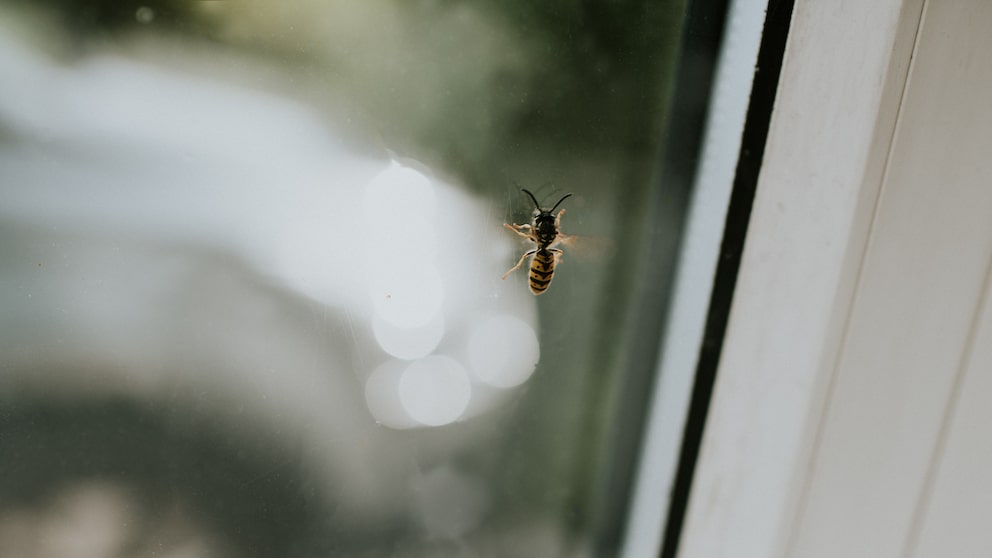
In summer, it happens regularly: a faint buzzing in the apartment, followed by the constant bumping of an insect against the windowpane. Even though the window is tilted, wasps or bees fly seemingly aimlessly up and down—unable to find their way out. Why the insects can’t find their way outside and how to help them is explained by an insect expert from the German Wildlife Foundation.
There is a simple reason for this, as Christian Schmid-Egger, project manager of the German Wildlife Foundation in the Berlin Wild Bee Project, explains in an interview with the German Press Agency: “The reason is relatively simple. All flying insects always orient themselves toward the light, especially when they are disoriented or need to flee from something.”
Often, the animals first fly into a darker room, perhaps in search of food. If disturbed there, they instinctively move toward brightness—that is, to the window. But the glass pane becomes an invisible barrier: “They then fly endlessly against this pane because they have an internal program that tells them: ‘Flee to the light!'”
In doing so, they repeatedly fly up and down—also out of exhaustion: “They naturally fly up and down because they sink in between when they have no strength. Then they fly up again—and repeatedly against the pane.”
Tilted Windows Often Aren’t Enough
The fact that a tilted or slightly open window rarely leads to a solution is also due to the limited perception of the animals. “It’s just that they simply don’t see this exit. Insects have great difficulty perceiving this glass pane. They can’t rationally think like we do: ‘There’s a gap down there that I can fly through.'”
In some cases, a gentle nudge toward the opening can help: “If the open gap is exactly in the line where they are trying to fly out, it works. You can see this if you tilt the window and nudge the insect with a piece of paper toward the gap—then the wasp or bee sometimes flies out.”
How to Safely Get Insects Back Outside
If a bee or wasp can’t free itself, Schmid-Egger recommends a gentle method using a cloth handkerchief: “If you have a bit of dexterity, you can take a cloth handkerchief, gently grasp the insect against the windowpane, and release it at the open window—then it flies away. You just have to be careful not to squeeze too hard. Otherwise, the insect will be crushed. This happens quickly, especially with flies.”
The cloth also serves as personal protection: “The cloth prevents you from being stung. With a double-folded cloth handkerchief, you can safely maneuver even bees and large wasps out of the window. Their stingers are no longer than half a millimeter, so they can’t get through.”
As a second option, the expert mentions the classic glass-and-paper method: “Take a glass and place it over the animal. Then carefully slide a piece of paper—preferably something sturdy like thin cardboard—in between. This way, you can catch wasps and bees or other insects and release them at the open window. It requires some skill, but I think you can manage it.”
With material from dpa