


July 16, 2025, 3:16 pm | Read time: 4 minutes
Whether it’s empty pet food packages, chewed-up toys, or old medications–pet owners inevitably produce a variety of different waste. But where does it all go? The answer isn’t always intuitive, but it’s clearly regulated. PETBOOK provides an overview.
In addition to the well-known rules for packaging and litter, pet owners should also pay close attention to waste bags or leftover medications. Helpful tips for proper disposal are provided by initiatives such as “Mülltrennung wirkt” and the websites of local waste management companies. Be cautious: Depending on where you live, there may be municipal differences regarding the disposal of pet waste.
Pet Food Packaging Belongs in the Yellow Bag
Packaging for food, care products, and cleaning agents made of plastic, aluminum, or composite materials should go in the Yellow Bag or Yellow Bin unless they are made of paper, cardboard, or glass. This includes:
- Cans, aluminum trays, and stand-up pouches for pet food
- Plastic packaging for treats or chew bones
- Packaging made of multiple materials, such as coated litter bags
- Empty bottles and tubes of shampoos or toothpaste
- Cleaning and hygiene sprays for cages or litter boxes
It’s important that the packaging is completely emptied–this also applies to spray cans. Screw caps and lids should be disposed of separately but also belong in the Yellow Bin or Yellow Bag.
Dispose of Paper and Glass Separately
Paper packaging and boxes go into the paper recycling. Glass packaging, such as bottles for care oils or vitamin supplements, should be placed in the appropriately colored glass container–white, green, or brown.
Toys and Accessories: What Goes in the Trash
Smaller items like chewed-up toys, dog leashes, or play balls made of wood or plastic belong in the trash. Larger items like scratching posts or litter boxes are usually disposed of as bulky waste.
Metal items–such as feeding bowls or transport cages–can usually be dropped off at recycling centers. Small metal or plastic parts may also be placed in the recycling bin in many municipalities, if available.
Litter, Feathers, and Hair: Trash or Compost Bin?
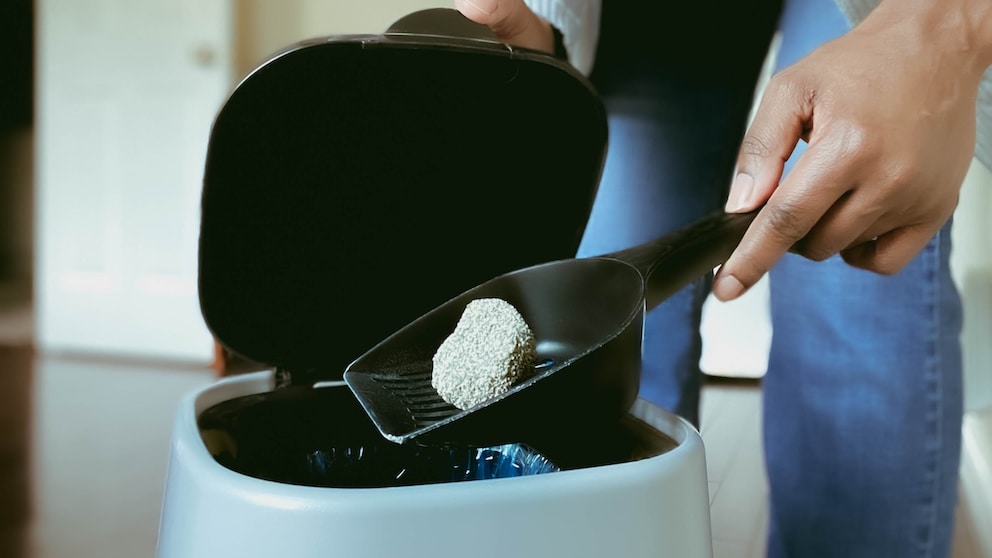
Used litter from cats or small animals must go in the trash–as do disposable gloves used when cleaning toilets or cages.
For natural litter: Depending on municipal regulations, biodegradable litter made from natural materials may be allowed in the compost bin. This also applies to animal hair and feathers–checking with the local waste management company can provide clarity. Sometimes you may find information that cat feces can be disposed of in the toilet. However, this can be dangerous, as cat feces can contain a worm parasite that is not killed during water treatment.1
Bird and Small Animal Litter Often Compostable
Bedding from non-carnivorous small mammals like guinea pigs, hamsters, or rabbits, as well as from birds, can often be disposed of in the compost bin in many municipalities–provided it is untreated natural material without chemical additives. 2
Dog Waste Bags: Trash–Even Compostable Ones
Dog waste bags–even compostable ones–belong exclusively in the trash. Only there are the pathogens they contain reliably destroyed through incineration. Public trash cans, such as those along walking routes, are also suitable disposal locations–they are treated like regular trash. 3

Can You Simply Dispose of Veterinary Medicines in the Trash?

Raccoon in the Garden and House? 6 Tips to Keep It Away
Animal Medications and Bandages: Dispose of Responsibly
Old or unused animal medications should not be flushed down the toilet or sink–this would unnecessarily burden the environment. According to the Federal Environment Agency, 40 to 90 percent of the active ingredients in animal medications are excreted and can enter soil and water through manure. Therefore, disposal should be done through collection points, veterinary practices, or the trash–provided it is incinerated at high temperatures. This completely destroys the active ingredients. 4
The package insert contains instructions for proper disposal–these should definitely be followed. More on the disposal of animal medications can be found in this PETBOOK article.
Conclusion: There Are Clear Rules for Every Type of Pet Waste
From pet food packaging to litter to animal medications: The disposal of pet waste is specifically regulated–and it often has ecological significance. Proper sorting protects the environment and supports a functioning recycling system. If in doubt, local waste management companies or packaging instructions can provide guidance.
With material from dpa