

August 2, 2025, 1:48 pm | Read time: 4 minutes
If you’re out in nature with a dog or cat, you should be especially vigilant from June to August. During this time, a plant that can pose a serious threat to pets grows along many riverbanks, forest edges, and even in gardens: giant hogweed. The animal welfare organization Four Paws strongly warns of the dangers posed by this toxic plant and explains how to identify it and what to do in an emergency.
Treacherous Neophyte Without Natural Enemies
Giant hogweed grows along streams and rivers, but also in fields, forests, or even cultivated gardens. Those walking their dog or letting their cat roam should keep a close eye on their pet. The animal welfare organization Four Paws explains how to identify the toxic plant and what symptoms may occur.
Originally from the Caucasus, giant hogweed (Heracleum mantegazzianum) has spread widely in Europe. It is often found along roadsides or on wasteland, and private properties are not spared either. The perennial plant can grow up to 13 feet tall, displacing native plants as it has no natural enemies. In Europe and North America, it is considered an invasive plant (neophyte).
Its real danger lies in the plant sap: It contains furocoumarins—toxic compounds that can cause severe skin irritation when exposed to sunlight. Even a light touch can cause redness, painful blisters, and in severe cases, allergic reactions. The vapors can also irritate the respiratory tract, especially in sensitive individuals and children—and pets.
How to Identify Giant Hogweed
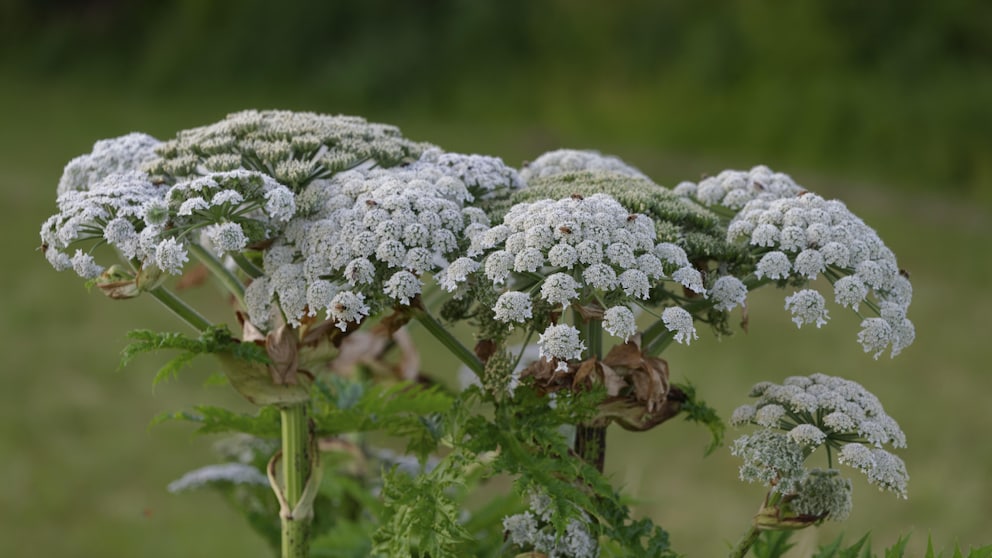
Due to its enormous size, giant hogweed is relatively easy to identify. Notable are the strong, hairy stems with purple spots and the large, jagged leaves. During the flowering period from June to July, the Hercules plant produces impressive white flower umbels that can reach a diameter of up to 31 inches.
The plant prefers sunny to partially shaded, moist locations. Its danger mainly comes from the plant sap, which is present in all parts of the plant. If it gets on the skin and is exposed to sunlight, it can trigger a phototoxic reaction, with sometimes severe consequences.
Initially, only itching and skin redness appear. But within 12 hours, painful blisters, swelling, ulcers, or even burns can develop. If dogs or cats sniff or lick the plant parts, symptoms such as vomiting, diarrhea, or excessive drooling may occur.

These Houseplants Are Safe for Cats

Plants Horse Owners Should Protect Their Animals From
How Giant Hogweed Differs from the Harmless Common Hogweed
When encountering large umbellifers on walks, one should look closely—because the dangerous giant hogweed looks deceptively similar to the native common hogweed at first glance. However, there are clear differences that should be known to properly assess the risk, as the native common hogweed generally does not pose a comparable threat to pets.
Common hogweed is significantly smaller than giant hogweed, usually between 3 and 6 feet. The leaves are also a distinguishing feature: Giant hogweed has deeply incised and very large leaves, sometimes over 3 feet wide. Differences are also evident in the stem: Common hogweed is usually uniformly green or only slightly spotted. In contrast, giant hogweed has strong ridges and the typical red-purple spots.
The white flower umbels of common hogweed are also much smaller and more compact. If unsure, it is still advisable to keep a distance, as even though common hogweed does not have as strong a phototoxic effect as its invasive relative, caution is still warranted. In very rare cases, contact with common hogweed can cause skin reactions in sensitive animals. Especially in sunny weather or if the animal is particularly sensitive, it is better to be safe.
Quick Reaction is Crucial
If you observe the described symptoms after contact with giant hogweed in your pet, you should wash the affected skin areas with water as quickly as possible. And: move into the shade quickly, as direct sunlight can intensify many symptoms.
According to the animal welfare organization, a visit to the veterinarian is a must in such a case. There, the animal will be thoroughly examined, and the complaints will be treated accordingly. For aftercare, a special sunscreen can help protect the irritated skin.
With material from dpa