


July 31, 2026, 4:18 am | Read time: 5 minutes
If you plan to fly with a dog or cat, don’t start planning at the airport. Whether it’s a transport box, vaccinations, entry requirements, or airline rules, pet owners have a lot to consider before departure. PETBOOK explains how to make flying with a dog or cat as stress-free and safe as possible.
Can my cat and dog fly with me on the plane?
Before booking a ticket, it’s important to check if the airline allows animals on board. The ADAC notes that not all airlines do—and the regulations can vary significantly.
For example, Lufthansa allows small dogs and cats to fly in the cabin if they weigh no more than eight kilograms, including the transport box. Heavier animals are transported in the climate-controlled cargo hold. The minimum age of the animal also matters and can vary depending on the destination country.
Since only a limited number of pets are allowed per flight, early registration is advised. Costs also vary and, for Lufthansa, depend on the flight route. Special regulations apply to certain breeds, such as fighting dogs.
The following major airlines allow dogs (and cats, sometimes other small animals) in the cabin:
- Air Europa
- Air France
- Condor
- Etihad
- Eurowings
- Iberia
- Iberia Express
- KLM
- KM Malta
- Lufthansa
- Norwegian Air Shuttle
- Swiss
- TAP Portugal
- TUI Fly
- Turkish Airlines
- United Airlines
New Rules at ITA Airways
Regulations for flying with pets continue to evolve, as shown by a recent example: Lufthansa subsidiary ITA Airways will allow larger dogs up to 30 kilograms in the cabin on selected domestic flights starting August 3, 2026. The “Large Dog on Board” service was introduced for this purpose.
The animals do not need to travel in a transport box but remain in a special cabin area next to their owners, secured by a harness. For now, this offer is only available on selected routes. Most airlines still only allow dogs and cats in the cabin if they do not exceed a certain maximum weight, including the transport box.1
Dog and Cat on the Plane: The Right Transport Box is Mandatory
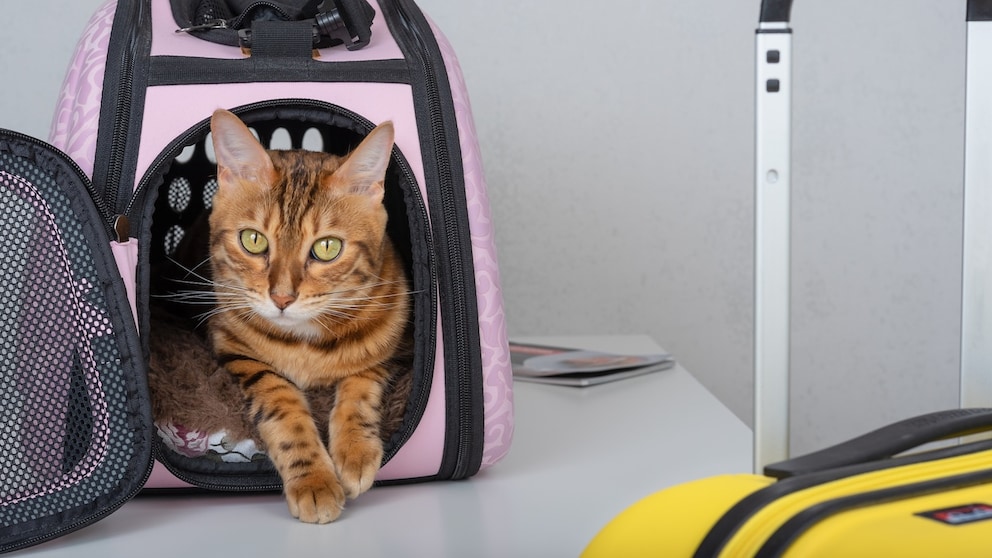
An appropriate transport container is required for taking animals on a plane—and must be provided by the owners. The airline association IATA recommends that the animal has enough space to “turn around normally while standing, stand up fully, and lie in a natural position.”
The size of the box can also vary by airline. According to ADAC, the name, address—both home and vacation—and phone number must be clearly visible on the outside.
To help a dog or cat get used to the flight box, the animal welfare organization Peta advises practicing “relaxed stays in the transport box weeks before the trip.” A familiar blanket or favorite toy can also have a calming effect.
Attention! Often, the specifications for dog boxes listed on airline websites are not sufficient. What matters at check-in is that the dog can turn and stand in the box and that it does not exceed the maximum weight with the animal. Measurements are rarely taken.
Veterinarian Visit and EU Pet Passport
A visit to the veterinarian should be part of the travel preparation. Here, necessary vaccinations can be checked, the chip number verified, and the EU pet passport issued. You can also get information about the entry requirements of the destination country.
Shortly before departure, the animal should not eat much. The IATA recommends: “Feed only a light meal about two hours before departure.” Water, however, should be available until departure. A final round of exercise before entering the transport box is also advisable.
Which Dogs and Cats Can Fly in the Cabin
In general, many airlines allow small dogs or cats in the cabin—provided they fit in an appropriate transport container and do not exceed a certain weight. Specific requirements vary by airline. The following guidelines offer an initial orientation.
Many airlines, for example, do not allow short-nosed breeds. This includes dogs like Pugs or French Bulldogs. For cats, Persians and now some British Shorthairs are included.

Airline Lost Dog Mona–Court Rules She’s “Luggage”

Vacationing with Your Dog–Gear, Vaccinations, Travel Kit
Behavior: Calm, Clean, Unobtrusive
In the cabin, dogs and cats must not disturb other passengers during the flight—through barking, whining, or odors. Owners of particularly noise-sensitive or anxious dogs should expect complaints. In the worst case, the animal may be moved to the cargo hold at the owner’s expense or banned from future flights.
Flying can also be physically taxing: Dogs can suffer from ear pain during the flight due to pressure. If you know your pet is sensitive to air pressure or prone to ear infections, consult a veterinarian beforehand.
Tip: To help with ear pressure, give the dog or cat something to lick during takeoff and landing. Swallowing helps the dog reduce ear pressure.
Direct Flights Are Better for Animals
The organization Peta recommends, “if possible, choose a direct flight.” If a transfer is necessary, ADAC advises clarifying in advance how the onward transport on the connecting flight will be handled.
Flights in the cargo hold mean stress for many animals—and unlike in the cabin, there is no familiar person to calm them. Therefore, it should always be carefully considered whether flying is really sensible for the animal.
With material from dpa