

July 31, 2026, 7:08 am | Read time: 5 minutes
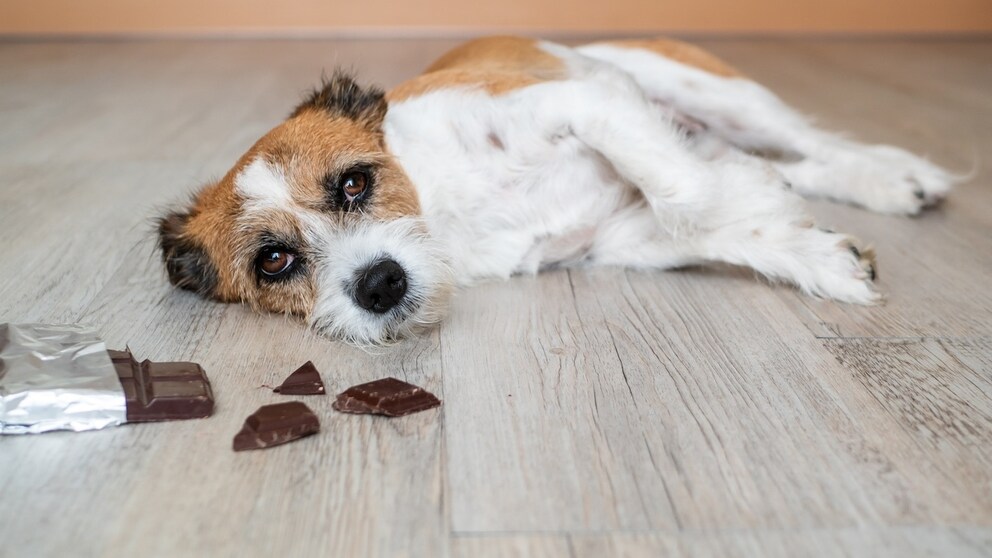
PETBOOK editor Louisa Stoeffler believes: The last hour in a pet’s life is not the time for sentimental gestures at the expense of the animal’s health. Should dying dogs and cats eat chocolate before their life ends? This thought is not comforting. On the contrary, it is anthropomorphism and a misguided form of animal love.
Where the Idea Comes From
I have had to say goodbye to many pets. The last petting, the lingering gaze, the silence afterward–these are moments that leave a lasting impression. Forever. But one thing is clear to me: Dying dogs and cats need love and closeness in their final minutes–but certainly not chocolate.
And yet there are veterinary practices that do exactly that: They offer so-called “goodbye kisses”–a piece of chocolate as “sweet comfort” on the final journey. The Smiths Station Animal Hospital even writes on its Facebook page that a jar of Hershey’s Chocolate Kisses–a well-known candy in the U.S.–is reserved for their euthanasia patients. “[B]ecause no dog should go to heaven without tasting chocolate.”
This post has since circulated online, moving many to tears who have lost a pet. However, it quickly becomes apparent: It’s not about the animal’s needs, but about human grief and how to alleviate it. This leaves me speechless.
Not only because chocolate can be life-threatening for dogs and cats. But because it is a form of anthropomorphism that occurs at a moment when we bear a great deal of responsibility–not for our feelings, but for the animal’s well-being. Because what many apparently forget: Chocolate is poison for our beloved pets–and we don’t give it to them for good reasons while they are still healthy.
“Goodbye Kisses” with Neurotoxin
The substance that makes chocolate so pleasant for us humans is called theobromine. For us, it has a mildly stimulating effect, similar to caffeine. But dogs and cats can hardly metabolize this substance–it remains in their bodies for hours and irritates the central nervous system. The Veterinary Medical School of the Justus Liebig University in Giessen lists the symptoms of chocolate poisoning in dogs and cats:
- Balance disorders
- Gait abnormalities
- Tremors
- Rapid heartbeat
- Seizures
The stimulation from theobromine is too much for the nervous system of most animals. Beke Enderstein, a nutritionist and expert, also warns in her contribution with us that cocoa and chocolate should be reserved for the pet owner alone:
If an unsupervised dog secretly eats a few chocolates from the table, it can lead to digestive issues such as vomiting, diarrhea, and seizures with balance disorders and tremors. At higher doses, rapid heartbeat and seizures are observed. In the worst case, the dog’s death from heart failure cannot be ruled out.
Too Much Chocolate Quickly Replaces the Euthanasia Drug
As little as 20 to 30 milligrams of theobromine per kilogram of body weight can trigger initial symptoms. At 100 milligrams, it can become fatal. Then, a euthanasia drug is no longer needed, but the dog or cat dies from poisoning along with seizures.
I wonder: How can we knowingly subject a dying animal to this? Would we give ourselves a dose of Novichok shortly before death just to know how it feels?
What Really Matters in the End?
Even though I just got very drastic: I do understand the gesture. I understand the thought: “One last treat before it’s over.” But chocolate is not a treat. It is not an act of care–but a risky misstep. And if the pet is already weakened, ill, or sedated, even a small amount of chocolate can mean additional suffering. Why would I do that to my best friend at the end?
It’s not about whether the animal “is going to die anyway.” This attitude is cynical. It’s about how it dies–in what condition, with what sensations, with what level of dignity. Chocolate is not a symbol of love if it brings suffering.

First Aid for Dogs: What to Do in an Emergency

These Medications Can Be Deadly for Dogs and Cats
True Animal Love Shows in Restraint
We humans often find it difficult to let things be when they serve not us, but only the animal. A particularly beloved toy? Maybe. A familiar scent? Very much so. But please, no substance that is listed as “highly toxic” in every guide to dog health–and also with us.
I think we need to stop seeing our pets through a human lens–especially in the most sensitive moments. Dying dogs and cats don’t need a “last chocolate kiss.” They need us. Our closeness, our love, our courage.
If we can’t manage to be strong for the animal in its final minutes, that’s human. But then we should at least do nothing that could worsen its condition–out of a misguided idea of love.
A Call to Owners and Veterinarians
I therefore wish that veterinary practices critically engage with this topic. And that owners ask themselves: Is this gesture for my pet–or am I alone in thinking it needs a treat that I like myself?
When it comes to saying goodbye, sometimes less is more. A look, a soothing pet. A voice they know. That is the last kiss that dogs and cats truly need. No more–but please, no less.