

January 3, 2026, 7:21 am | Read time: 8 minutes
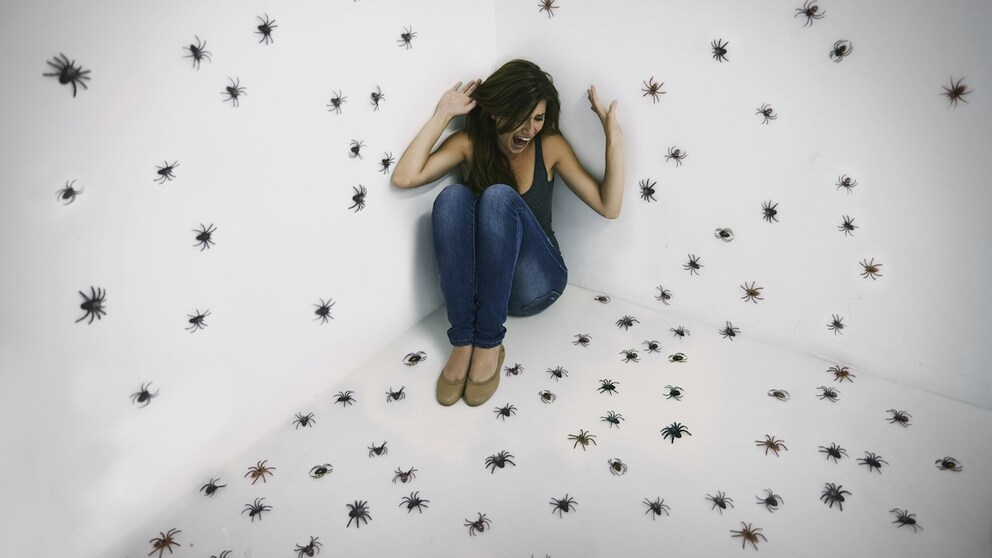
The spider on the ceiling, the neighbor’s barking dog, or a slithering snake—animals can trigger not just fright but outright panic in some people. Even though many find it hard to imagine, animal phobias are real, and as literature shows, they are not that uncommon. PETBOOK presents some of the most well-known phobias.
Overview
- What is a Phobia?
- Arachnophobia – Fear of Spiders
- Ophidiophobia – Fear of Snakes
- Herpetophobia – Fear of Lizards and Other Reptiles
- Cynophobia – Fear of Dogs
- Ailurophobia, Felinophobia, or Gatophobia – Fear of Cats
- Apiphobia – Fear of Bees and Bee-like Insects
- Elasmophobia – Fear of Sharks
- Equinophobia – Fear of Horses
- Ornithophobia – Fear of Birds
- Murophobia and Musophobia – Fear of Mice and Rats
- Why You Should Take Animal Phobias Seriously
- Sources
What is a Phobia?
Phobia is derived from the Greek word “phobos,” which means something like fear or dread. Those affected often suffer from panic attacks. The most well-known phobia related to the animal kingdom is arachnophobia—the fear of spiders. However, there are many other phobias that affect some people. For example, a cat, a bee, or a dog can trigger panic in some individuals. These fears are collectively known as zoophobia, the fear of animals. 1, 2, 3
Arachnophobia – Fear of Spiders
It is considered widespread—and is often “learned.” Young children model their parents’ behavior. If they see their parents panic at the sight of a spider, they are likely to react similarly. According to numerous publications, parents pass this fear on to their children.
Additionally, spiders are quick crawlers and can swiftly disappear behind furniture, only to reappear just as quickly. Their appearance—eight legs are rather unusual—also contributes to the suspicion many people have of them. The fact that there are poisonous species in many countries, whose bites can be dangerous to humans, also adds to the panic.
Ophidiophobia – Fear of Snakes
Snakes also apparently trigger fear in many people. Silent, fast, and venomous—these characteristics are often associated with snakes. Like spiders, snakes often appear unexpectedly, though in Central Europe, they are less likely to be found in homes. Even in the wild, encounters with snakes are rare for most people here. However, snakes are often depicted as evil, dangerous, and mysterious in fairy tales and mythology, which may contribute to cultural fears of these animals.
Those suffering from ophidiophobia fear either being strangled by a snake, as literature suggests, or dying from a venomous snake bite.
Herpetophobia – Fear of Lizards and Other Reptiles
Not only snakes, but also lizards and other reptiles like turtles and crocodiles can trigger fear. The cause is unclear, but learned factors and traumatic experiences can intensify fear. Cultural factors may also play a role, as literature suggests. Lizards remind people of dragons, which often appear as fire-breathing and ominous in fairy tales.
Additionally, humans have learned early in their evolutionary history that reptiles, like snakes, can be dangerous, which is why they developed the ability to detect these animals early and avoid them as much as possible.4
Cynophobia – Fear of Dogs
Similar to the fear of spiders, the fear of dogs is often passed from parents to children, as numerous studies suggest. Many owners of larger dogs have likely experienced this: As soon as they pass a young child with a parent, the child is pulled aside and warned about the “dangerous dog.” The parent stands protectively in front of their child, keeping a close eye on the dog and its owner. The fact that the dog is on a short leash and pays no attention to the child or the panicked parent does not reassure them. Thus, the child learns that a dog is ominous and dangerous. These thoughts can later develop into a phobia.
Negative experiences with a dog, such as being bitten or growled at, can also trigger fear. Media reports of dog attacks can reinforce such animal phobias or become triggers themselves.
Ailurophobia, Felinophobia, or Gatophobia – Fear of Cats
The fear of cats is not as rare as cat owners, who share their sofas and even beds with their furry companions, might think. About 15 million people worldwide are said to suffer from this panic disorder, with the actual number likely higher.
This fear often does not extend to all cats, but only to those with certain features, such as tabby or black fur. Allegedly, more men than women are affected by this fear. Triggers can be negative experiences or behaviors adopted from others. Superstition and the negative portrayal of cats in fairy tales—as companions of witches and wizards—and mythology can also be causes.5
Apiphobia – Fear of Bees and Bee-like Insects
Admittedly, no one wants to be stung. A bee or wasp sting is not only unpleasant but can cause severe pain or even intense, sometimes life-threatening allergic reactions. The phobia of bees and their relatives causes sufferers to panic and flee at the mere sound of buzzing nearby. Affected individuals fear not only the insect itself but also being stung.
This fear affects not only those allergic to bee or wasp venom but also people who are not allergic or have never been stung. Generally, the fear of crawling insects and anything else that creeps outdoors and occasionally indoors is known as entomophobia. The fear of insect stings and stinging insects is called acarophobia.6, 7
Elasmophobia – Fear of Sharks
The fear of sharks is called elasmophobia, while the excessive fear is also known as selachophobia. This fear is known worldwide, not just among coastal residents where sharks swim offshore. The 1975 film “Jaws” by Steven Spielberg is said to have contributed significantly to the fear of sharks, even among people living far from seas and coasts. It portrayed sharks as brutal, ruthless, and cold-blooded killers that deliberately hunt humans. Although this image has been debunked by research, the fear of sharks remains widespread.
Also interesting: Do You Know the Chocolate Dwarf Fruit Bat? 7 Curious Animal Names and Their Meanings
Equinophobia – Fear of Horses
Horses have large heads and teeth. Which horse enthusiast hasn’t heard this explanation when someone hesitates to get too close to the animal? However, those with extreme fear of horses, riding, and/or falling from a horse likely suffer from equinophobia, also known as hippophobia.
The sheer size of the horse can also be a trigger for those affected, as can the sight of horse equipment like bridles or even stables. It’s not just encounters with the animals themselves that cause panic. Simply looking at photos or statues is enough. Affected individuals also avoid situations where they might encounter horses.
Since horses are considered very sensitive, they often sense when someone is afraid of them. This also applies to dogs and cats. Horse phobia often has its roots—like most other animal phobias—in a traumatic experience, such as falling off a horse or being kicked.8
Ornithophobia – Fear of Birds
Hollywood director Alfred Hitchcock made it famous and vividly illustrated this phobia with his film “The Birds.” Ornithophobia is the intense, exaggerated fear of birds. Even the mere thought of these animals or the sight of birds can trigger symptoms in those affected.
Incidentally, a specific, seemingly bizarre form of this fear is anatidaephobia—the fear of being watched by a duck. In this case, it’s not the animal species itself that causes panic, but the feeling that the duck might be staring at the affected person. This phobia is said to exist, although it became known through a comic. Whether there are really people who suffer from it is unclear.9, 10
These Animals Eat Their Own Kind—for Good Reason
The 13 Deadliest Animals in the World–Why Sharks Rank Last
Murophobia and Musophobia – Fear of Mice and Rats
What’s scurrying there!? The fear of mice and rats is also widespread, similar to the fear of spiders. Just the thought of encountering a mouse or rat can trigger severe anxiety symptoms in those affected. They avoid situations where these animals might appear, such as basements and trash can storage areas.
The cause of this fear may partly lie in human development. Rats and mice were considered carriers of serious diseases. The plague, for example, was spread by fleas that jumped from rats to humans. Additionally, rodents are seen as pests that not only eat grain and other supplies but also contaminate them with droppings and other traces, making them unusable for humans. The disgust for these animals has been widespread for generations. Furthermore, rats and mice are often portrayed negatively in literature.11
Why You Should Take Animal Phobias Seriously
It’s important to know: A little unease about the large spider on the ceiling or the barking dog in the neighbor’s yard is not yet an animal phobia. Heart palpitations, sweating, panic, fleeing—those who truly suffer from an animal phobia typically show severe reactions and want only one thing when encountering the source of their fear: to get away quickly. Often, just a photo of the animal is enough to trigger such reactions.
Those who fear a particular type of animal should not be ashamed. No one is alone in their fear, and animal phobias are more common than many people think. There is also hope, as fears of animals can be effectively treated, according to medicine and literature, with professional help, such as through exposure therapy. Information on suitable treatments and other details can be provided by health insurance companies, support groups, and medical practices.